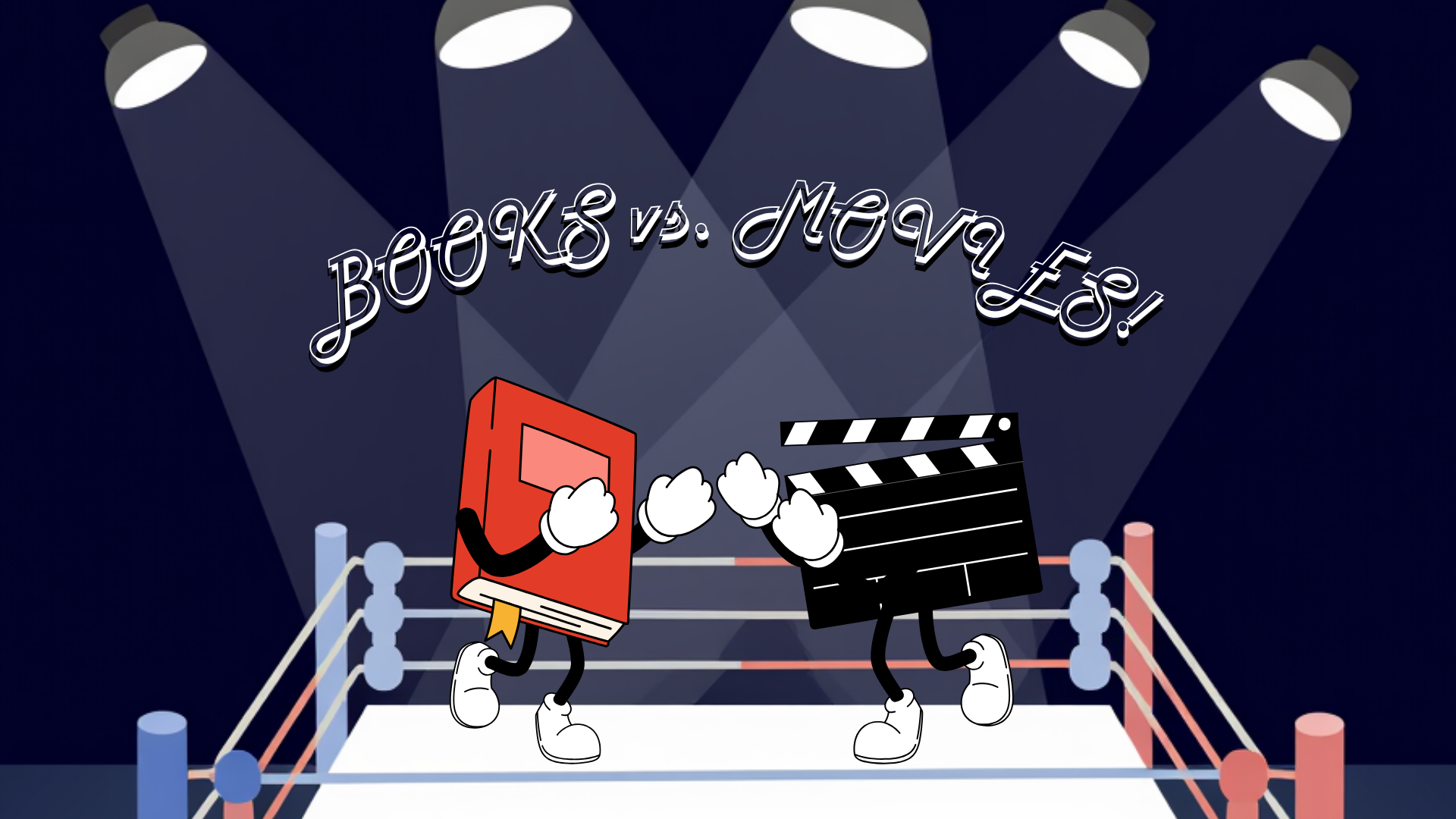
Books vs. Movies

By Jaline Nanninga | Staff Writer
Throughout my time in school, I can recall nearly every book I have had to read for the curriculum. In third grade for instance, it was “Because of Winn Dixie” and “Fantastic Mr. Fox,” and it was not just the books we read. If it had a movie to accompany it, we would watch the movie in tandem with the chapters we read the day before.
In high school, it is the exact same. The only difference is the books have gotten heavier, and the movies are less animated. Today, a lot of the books that are revered as classics have a film adaptation to go with it. So now when we get assigned a book to read, it is in our nature to automatically assume there will be a movie to watch with it.
However, long before we could watch an adaptation of Shakespeare where the main characters are gnomes, we had to read it. Reading his stories helped us have the chance to experience his tales first-hand. We would get to interact with writing styles we would never have seen before, and this can apply to many of the classics we read, not just Shakespeare. I mean, sure, watching a movie adaptation of “Of Mice and Men” is fun, and it can make you feel even more melancholy about the ending. However, personally speaking — and spoilers ahead – reading about the death of Lennie made me bawl like a baby, whereas watching it happen barely invoked anything in me. My point being, most film adaptations do not have the same effect on emotion that books do.
Now, is that to say that film adaptations are never better than the book? No, absolutely not. Reading “Fantastic Mr. Fox” wasn’t exactly fun to me. I was constantly lost and confused on what was going on in the story, but watching the movie not only made that story one of my favorites of all time, it also made me develop new feelings towards the plot, characters and themes. There are plenty of movies that have had this impact on me: “Little Women,” “Pride and Prejudice,” and even “The Outsiders.” With these book-to-film adaptations, it always made the second time reading it more fun. It gave me a clear vision of what I was reading and it gave me actual faces to put to names, which was helpful.
The debate about whether books or movies are better exists outside of schools' English curriculum. For instance, the book “People We Meet On Vacation” by Emily Henry was made into a film adaptation and released to Netflix, and it sparked a handful of debates about not only the writing, but the pivotal moments adored by fans that were cut from the final product. All over Tiktok, a common theme in the comment sections of videos about the film made itself known: “They never should have made it a movie.” Which, unfortunately, is a sentiment I agree with. To take a beloved, cheesy romcom adored by many and make it something it is not, takes the fun out of film adaptations, and essentially the entire point of making them. Far too often, directors decide that the most essential parts of the story should be cut because it does not fit what they’re trying to convey. But, are they not meant to be conveying what the writer wanted? There was already a message conveyed by the author, and it was tied perfectly together with a ribbon. So, why change it so much to the point that it no longer is? In movies today, this happens way too much and it ruins what makes many movie adaptations so enjoyable.
All this to say, as a movie lover myself, it is essential to admit that we take literature for granted. No matter how good Daniel Radcliffe was in “Harry Potter and the Sorcerer’s Stone,” the feeling of reading the book can not be replaced.