
KMC Bans all Non-Clear Water Bottles

By Grace Alhzem | Staff Writer
Trends take over social media, and often daily life. Even in school, the effects of trends like purses, hair clips and water bottles are clearly seen. Owalas and Stanleys are currently some of the most popular. They keep water cold and have become a fun way of self-expression through their various colors.
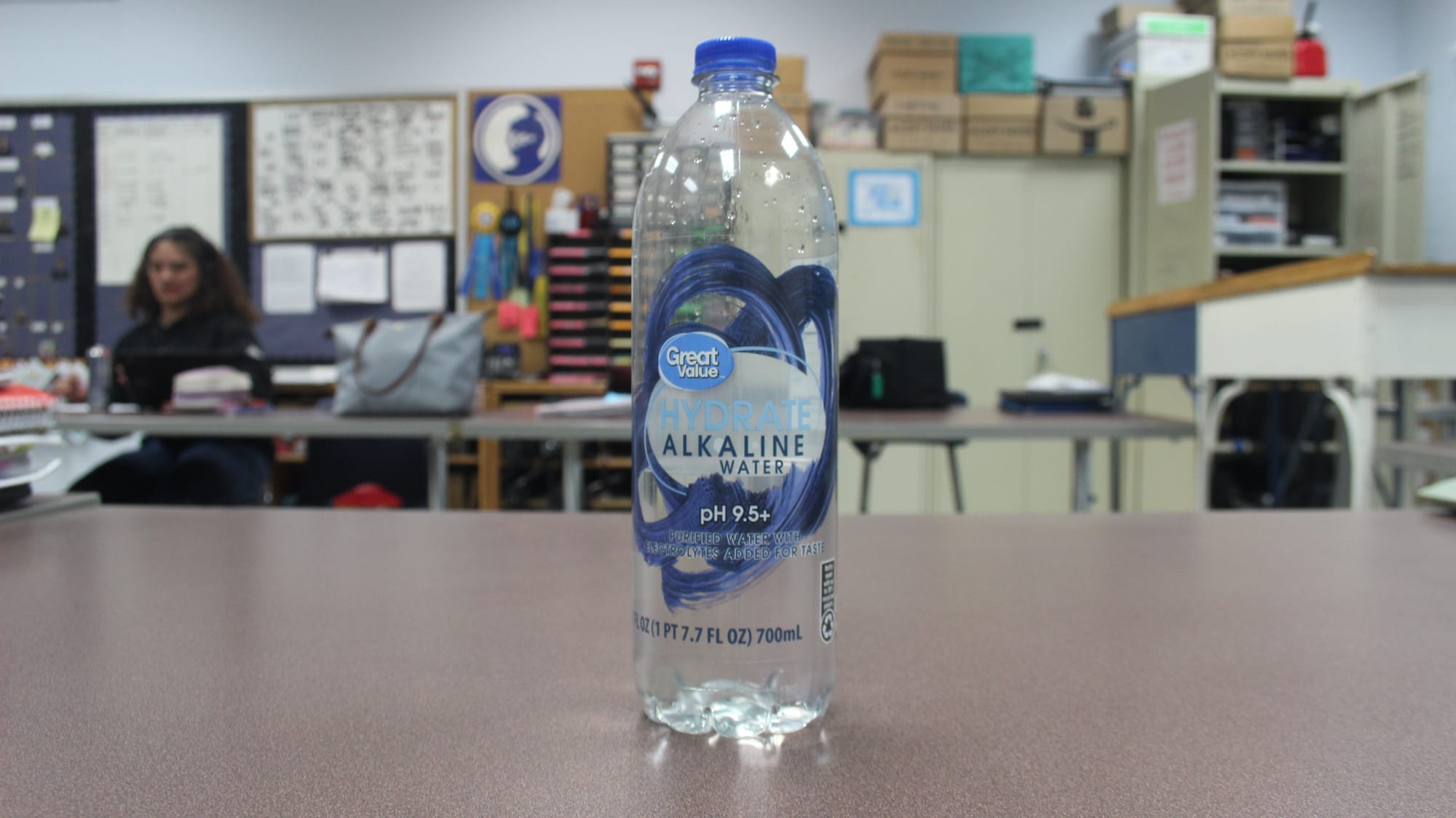
KMC rules clearly state that all water bottles must be clear, but students continue to ignore this rule. Many even go so far as to risk getting a demerit. Even though the rule serves a purpose, people dislike being unable to use the bottles they bought. According to Assistant Principal Dr. Michelle Olson, it is there to keep people safe, and ensures people are only carrying water. However many have been testing how far they could push the limits.
“I think the water bottle rule is unnecessary since people can sneak in other drinks anyways,” said senior Vada Shandy. “Plus, most people like drinking cold water and you can tell if a drink is water or not.”
Semi-clear bottles have become the most common ways the rules have been tested. Having a clear cap makes them technically clear, but a solid body makes it difficult to see what is actually in the bottle. These rules can be inconvenient, and even affect how much water students drink.
Unlike the other rules KMC enforces, this one specifically impacts hydration levels. Most teenagers prefer carrying around a non-clear bottle, but many also do not want to get a demerit. The water they drink in a day drops in correlation to this, and it often makes them dehydrated for sports, and just daily life.
“People bring energy drinks, why can't we bring a solid water bottle,” said junior Dan Nguyen. “Most of the clear ones are plastic, and the non-clear ones keep water cold.”
Not only that, but plastic water bottles are contributing to waste. Many of them are flimsy and need to be replaced, unlike the sturdy, non-clear, metal ones. According to waste habits, 481.6 billion plastic water bottles were used in a year. More than $1 billion worth of plastic bottles are wasted every year. Through the non-clear water bottle rule, the school helps contribute to the waste that takes years to undo. Despite these, the school continues to uphold the standards that non-clear water bottles should not be allowed.
“It’s an expectation we have, some schools don’t allow water bottles at all, so we are lucky,” Dr. Olson said. “You never know what someone is going to bring, and it was a rule when I first got here.”
Although clear water bottles are an option, many students continue to complain about the rule. Without the color options to express themselves, and the refreshing cold water, it is difficult for them to maintain a good hydration level for sports, school and other activities. Despite constant pushback from students, there seems to be no future with non-clear water bottles.