
COLLEGE SPORTS: COMPETITION OR CORPORATION?

By Gabby McDonald
Loyalty within college sports programs is dead.
This unfaithfulness comes down to one newer aspect of the game: money. “How much NIL money will I make?” “How many endorsements will I get?”-These are the types of questions that college athletes now have to consider before committing to a team. Committing for the season, that is.
This was not always the case. Take for example the University of Kansas’ basketball program. In 2022, before transfer portal rules went haywire, KU won the National Collegiate Athletic Association (NCAA) Championship with Ochai Agbaji, David McCormack, DaJuan Harris Jr., Christian Braun and Jalen Wilson. All five men played with KU for at least three of their four seasons. Similarly, in 1988, when a transfer portal would have been as realistic as a time portal, the NCAA Championship team consisted of five players who all played four seasons with KU. Now, according to KU Athletics, their 17-man roster consists of 12 new players, six of which are freshmen. And, only two players have spent their entire college career at KU.
These statistics are nothing short of alarming. College sports are no longer a matter of commitment, but of commerce. Never again will we see a roster that consists primarily of veterans. This is only one example of how Name, Image and Likeness (NIL) endorsements, as well as unrestricted transfer portal rules have ruined college sports.
According to Athletic Director U (ADU), prior to 2024, all NCAA-Division I athletes were given one free transfer in their college career if they met the given requirements: the athlete had not previously transferred, the head coaches of other teams did not directly contact the athlete without permission and the athlete gave their institution a written notice of their desire to transfer.
On April 22, 2024, this all changed: student athletes were given immediate eligibility to transfer anywhere, according to ADU. Since then, the transfer portal has gone out-of-control. Except for the deadlines of entering and exiting the portal, athletes may transfer whenever and wherever they would like, or more realistically, wherever they make the most money.
Similarly, laws regarding NIL money in college sports are limited, practically non-existent. According to ESPN, laws regarding the NIL are determined by each state, not the federal government. This causes numerous issues. First, this is a direct cause of the transfer portal getting out-of-hand. College athletes are given the freedom to transfer to whatever institution will pay them the most, whenever they want.
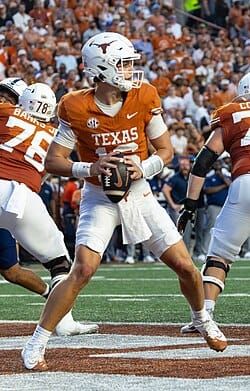
More rules regarding NIL money and the transfer portal are needed. It is absurd that student athletes are the multi-millionaires of our time. For example, Arch Manning, quarterback for the Texas Longhorns, is estimated to have an NIL payout of $6.8 million and Darian Mensah, quarterback for the Miami Hurricanes, follows close behind with about $6.5 million, according to The NIL Standard. College athletics have transformed into an unrecognizable game: a game of endorsements, recruiting and transferring.